
How to Prepare for Labour: A Complete Third Trimester Guide
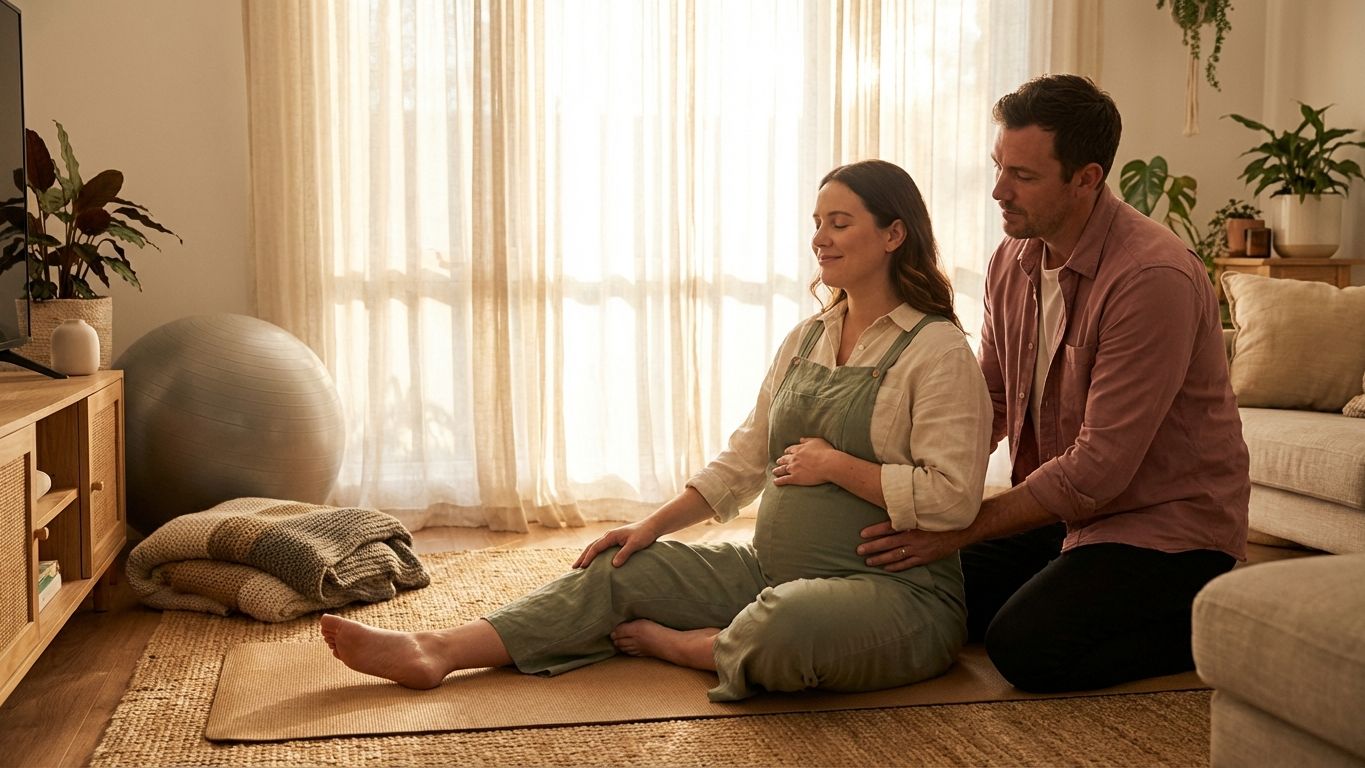
Hi there, beautiful mamas. If you're reading this somewhere between 28 and 38 weeks, I want you to know something: the fact that you're here, looking for ways to prepare, already puts you ahead. Because real labour preparation the kind that actually helps goes so much deeper than packing a bag and booking a hospital tour.
Most people think they know how to prepare for labour. They attend an antenatal class. They download a checklist. They maybe watch a few birth videos on YouTube. And all of that has value, truly. But then they arrive in the birth room and realise nobody taught them what to actually do when labour is in full swing.
This guide is about that gap. And how to fill it — with your body, your breath, your mind, and the person by your side.
Section 1: Preparing Your Body
Labour is physical. Which means your body is the primary instrument and it benefits enormously from preparation in the weeks leading up to birth.
Movement matters more than rest. While rest is absolutely important in the third trimester, staying gently active helps your baby find an optimal position for birth, keeps your pelvis mobile, and builds the stamina you'll draw on during labour. This isn't about fitness. It's about function.
Some of the most useful movement for preparing for birth in the third trimester includes:
- Pelvic circles and figure-eights — on a birth ball or standing, these mobilise the sacrum and encourage baby to settle well
- Hands-and-knees positions — cat-cow, gentle hip rocks, and spending time off your back all support optimal baby positioning
- Deep squat holds — these open the pelvic outlet and stretch the inner thighs; hold supported against a wall if balance is an issue. Practice pelvic circles on a ball if you have pelvic pain.
- Walking — simple, even 15-20mins helps with movement and mindfulness.
A word on the pelvic floor: many mamas come to me having been told to "just do Kegels." But pelvic floor preparation for birth is actually more nuanced than that. For labour, you need a pelvic floor that can release and lengthen as much as one that contracts. Learning to consciously relax your pelvic floor — breathing out, softening, letting go — is one of the most important physical skills you can practise right now.
We explore all of this in depth in our Yoga for Birth Workshop — including hands-on practice with movement, positioning, and pelvic floor release. If you're 24–34 weeks, checkout and register for next workshop.
For more on body-specific birth prep, have a read of this post — it goes even deeper on the physical side.
Section 2: Preparing Your Breath
If there's one single tool I'd put in every birthing person's hands, it would be their breath. Not as a relaxation technique, as a genuine labour management strategy.
Here's what most people don't realise: the way you breathe in labour directly affects how your body experiences sensation. When we brace and hold our breath through a contraction, we tighten everything — the jaw, the shoulders, the pelvic floor — and the sensation intensifies. When we breathe slowly, deeply, and intentionally, we signal to the nervous system that we are safe, and the body can soften.
This is the foundation of natural labour preparation through yoga. Specific breathing practices from the yogic tradition — including slow diaphragmatic breathing, extended exhale breathing, sound-based breath — are the exact tools I teach couples to use in the birth room.
A simple starting practice: next time you're sitting quietly, breathe in for a count of four, then breathe out slowly for a count of six to eight. As you exhale, imagine softening your jaw, your shoulders, and your pelvic floor. Practise this daily so it becomes a reflex — because in labour, you won't have space to think. You'll need it to be automatic.
The more you practise before birth, the more accessible this tool will be when you actually need it.
Section 3: Preparing Your Mind
Fear is one of the most underestimated forces in the birth room. And yet it's completely normal — almost universal. The question isn't whether you'll feel fear. It's whether you have the tools to move through it.
There's a concept I teach in my Yoga for Birth Couples Workshop called the fear-tension-pain cycle. It works like this: fear causes muscle tension, and tension increases the sensation of pain, which creates more fear. Round and round it goes. Understanding this cycle — just intellectually at first — can begin to break it. Because when you recognise what's happening in your body, you have a choice point.
The antidote to fear isn't information. It's trust. And trust is built through practice, not just knowledge. This is why birth preparation that involves actually doing — moving your body, breathing through sensation, practising with your support person — is so much more effective than reading or watching alone.
Some mindset practices worth building in the third trimester:
- Affirmations that feel true to you — not just be positive, but honest reminders: "My body is built for this." "I can do hard things." "Each wave brings me closer."
- Visualisation — spend a few minutes each day imagining your birth going well. This isn't wishful thinking; it's neurological preparation
- Breath-based relaxation — practice entering a calm state using breath, so you can return to it more easily under pressure
Section 4: Preparing Your Support Person
This is one of the most overlooked parts of how to prepare for childbirth — and one of the most powerful. Preparing your birth is not something you do alone.
Your support person — whether that's your partner, your mum, a friend, or a doula — will be in the room with you. And the support they're able to give is directly proportional to how prepared they feel. A confident, capable support person is genuinely one of the greatest assets you can have in labour.
Specifically, support people benefit enormously from learning:
- Comfort measures — lower back counter-pressure, hip squeezes, and positioning support that genuinely reduce sensation
- Breathing alongside — breathing audibly with the birthing person so they have a rhythm to follow (this is surprisingly powerful)
- Grounding cues — specific phrases and touch sequences that bring calm; much more useful than general encouragement
- How to read the room — when to talk, when to be quiet, when to step in and when to step back
- Questions to ask the care team — gentle advocacy without confrontation
We have a whole post dedicated to this: Your Partner's Role During Birth — worth reading together.
In our Yoga for Birth Workshop, support people practise all of these skills hands-on — so they walk in with real tools, not just good intentions. Find out more and register here.
Section 5: Practical Preparation
Alongside the physical and emotional preparation, the practical side of things does matter — and getting it sorted early means less mental load in the final weeks.
Your birth bag should ideally be packed by 36 weeks. Think: comfortable clothing for labour, snacks and drinks you actually want, a small speaker for music or affirmations, your notes, lip balm, hair ties, and anything that helps you feel safe and at home. Pack for your support person too — they'll need sustenance.
Birth preferences (sometimes called a birth plan) are worth writing — not because birth always goes to plan, but because the process of writing them helps you clarify your values and start conversations with your care team. Keep it simple: one page, dot points, written in a warm and collaborative tone.
Knowing when to go in is something many families feel uncertain about. Generally, for a first birth, the 5-1-1 rule is a useful guide: contractions five minutes apart, lasting one minute each, for one hour. But your midwife or care team will give you personalised guidance — make sure you ask before 36 weeks.
Pulling It All Together: Why Practice Matters More Than Information
Here's the thing about birth preparation guides — including this one: reading about breath, movement, and mindset is a starting point, not a finishing point. Labour is not something you can think your way through. Your nervous system, your body, and your support person all need to have practised.
This is why in-person preparation makes such a difference. There is something that happens when you actually breathe through a wave of sensation in a supportive room with your person by your side — your body learns it in a way that no amount of reading can replicate.
If you're 24–34 weeks pregnant and based in Melbourne, the Yoga for Birth Workshop on Sunday 26 April 2026 covers everything in this guide — hands-on, in-person, with Ragini. Movement for birth, yogic breathing, mindset tools, partner support practice, and practical preparation. All in one full day.
Date: Sunday 26 April 2026, 9am–3pm
Location: Balla Balla Community Centre, Selandra Blvd, Clyde North VIC 3978
Price: $299 per couple
Best for: 20–35 weeks pregnant — no prior yoga experience needed
Places are limited and the workshop is coming up soon. Register here to secure your spot.
You can also read about why a dedicated birth preparation workshop fills the gap that hospital classes leave.
FAQs: How to Prepare for Labour
When should I start preparing for labour?
The third trimester — from around 28 weeks — is the ideal time to begin dedicated birth preparation. This gives you enough time to practise breathing, movement, and mindset tools so they feel natural by the time labour begins. That said, any preparation is better than none, even if you're at 36 weeks reading this now.
Is yoga good for birth preparation?
Yes — and it's one of the most practical options available. Prenatal yoga addresses all four pillars of labour preparation: body (movement and positioning), breath (specific breathing techniques), mind (relaxation and mindset), and partnership (when practised with a support person). It's not about flexibility. It's about learning to work with your body and breath under pressure.
What should my partner do to prepare for labour?
Your support person should understand the stages of labour, learn comfort measures like counter-pressure and breathing support, and practise with you before the birth. The most common piece of feedback we hear from partners who've attended our workshop is: "I finally feel like I know what to do." If you can do only one thing together before birth, make it a hands-on preparation session.
Always consult your healthcare provider or midwife before starting any new exercise during pregnancy or postnatally.
Ready to Experience the Benefits of Prenatal Yoga?
Don't wait—start your journey with Mother'z Yoga today! Sign up now for a 7-day free trial and discover how our online prenatal yoga program can help you stay strong, calm, and connected throughout your pregnancy.
