
Round Ligament Pain During Pregnancy: Can Yoga Help?
Round Ligament Pain During Pregnancy: Can Yoga Help?
Hey lovely mums-to-be. If you've ever felt a sudden sharp twinge or aching sensation in your lower abdomen or hip area — especially when you roll over in bed, laugh, cough, or move too quickly — you may well be experiencing round ligament pain during pregnancy. It can be startling, especially the first time it happens, and it's one of those pregnancy experiences that no one quite warns you about.
So today I want to explain what's actually happening, why it occurs (especially in the second trimester), and share some gentle yoga stretches that many mamas find helpful for easing the discomfort. As always, please speak with your midwife or GP if you have any pain concerns in pregnancy — this post is here to inform and support, not replace professional advice.
What Is Round Ligament Pain?
The round ligaments are two thick bands of tissue that run from each side of your uterus down through your groin to the outer labia. Before pregnancy, they're relatively relaxed. But as your uterus grows and becomes heavier — which really ramps up in the second trimester — these ligaments stretch and thicken to provide support. That stretching is what causes the characteristic sharp, stabbing, or aching sensation.
The pain is most common between 14 and 27 weeks but can occur at any stage. It tends to appear suddenly, usually on the right side (though it can be bilateral), and may last anywhere from a few seconds to a few minutes.
What Does It Feel Like?
Round ligament pain is often described as:
- A sharp, stabbing sensation in the lower abdomen or groin
- An aching or cramping feeling that lingers for a short while
- Discomfort that begins with a sudden movement — rolling over, standing up quickly, sneezing, or laughing
If you're ever unsure whether what you're feeling is round ligament pain or something that needs medical attention — like persistent cramping, pain accompanied by fever, or bleeding — always contact your healthcare provider. When in doubt, get it checked.
Can Yoga Help With Round Ligament Pain Pregnancy?
Yoga won't eliminate round ligament pain (it's a structural process of a growing pregnancy), but many mamas find that gentle stretching, mindful movement, and improved body awareness can help reduce both the frequency and the intensity of the discomfort.
Specifically, prenatal yoga 20 weeks and beyond can help by:
- Releasing tension in the hip flexors and groin, which reduces pulling on the ligaments
- Improving postural awareness, so you move more mindfully and avoid sudden jerky movements
- Supporting overall pelvic alignment, which can ease surrounding muscular tension
- Providing a safe space to breathe and settle into your changing body
Gentle Yoga Stretches That May Help
Always move slowly and check in with how your body feels. If any pose increases your discomfort, please stop and rest.
Supported Child's Pose
Kneel on your mat with your knees wide enough to accommodate your bump. Gently lower your chest towards the floor, extending your arms forward or resting them by your sides. This opens the hips and gently decompresses the lower abdomen. Hold for five to eight slow breaths.
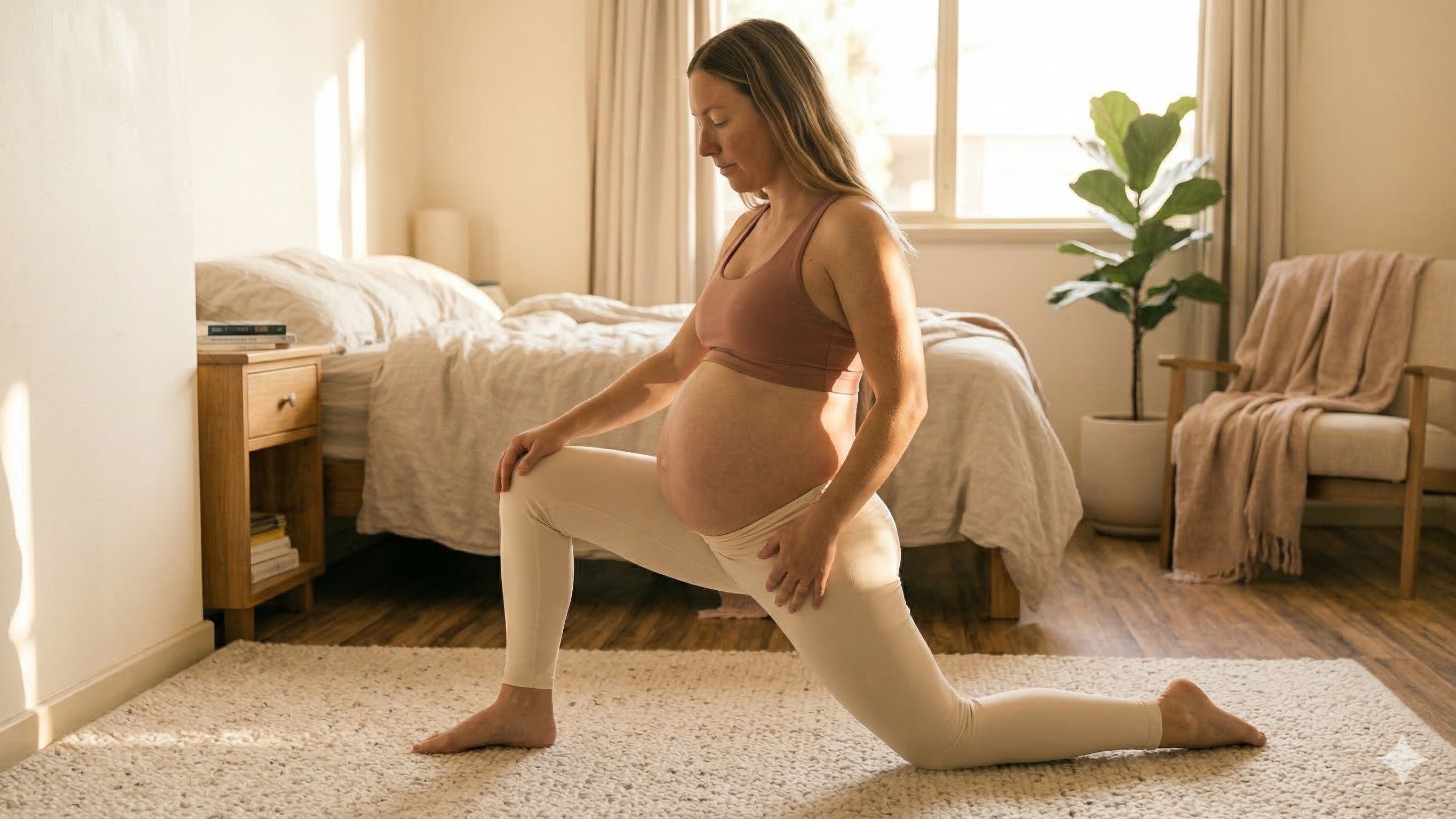
Hip Flexor Stretch (Low Lunge)
From a kneeling position, step one foot forward into a gentle lunge. Keep your front knee over your ankle and lower your back knee to the mat. Breathe into the front of your back hip. This gentle stretch can relieve tension in the hip flexors that may be pulling on the round ligaments. Hold for five breaths on each side. Use a chair or block for support if needed.
Side-Lying Rest Pose
Simply lie on your left side with a pillow between your knees and one beneath your bump. This supported position takes the weight of your uterus off the ligaments and allows them to rest completely. Even five to ten minutes in this position can bring meaningful relief.
Cat-Cow Flow
On all fours, gently alternate between arching your spine (cat) and releasing it down (cow), moving with your breath. This slow, rhythmic movement can ease tension through the entire lower trunk — a gentle stretch for pregnancy pain that most mamas tolerate really well.
A Few Tips for Managing Round Ligament Pain Day-to-Day
- Move more slowly and mindfully — especially when changing positions
- Bend your knees and flex forward before coughing, sneezing, or laughing
- A warm (not hot) wheat bag on the area can provide comfort
- Wearing a supportive belly band may help distribute uterine weight more evenly
Ready to Move Gently With Us?
If you'd love a guided prenatal yoga practice that addresses second trimester discomforts like this — with real modifications and Ragini's gentle cues — come and try Mother'z Yoga free for 7 days. Our trimester-specific video library includes classes for exactly this stage of your journey. [LINK: 7-day free trial of Mother'z Yoga]
Frequently Asked Questions
Is round ligament pain dangerous?
Round ligament pain is a normal part of pregnancy for many women and is not dangerous in itself. However, if you experience severe, persistent, or worsening pain — or pain accompanied by bleeding, fever, or difficulty urinating — contact your healthcare provider promptly.
Which side is round ligament pain usually on?
It most commonly occurs on the right side because of how the uterus typically rotates slightly to the right during pregnancy, but it can occur on both sides or alternate sides.
When does round ligament pain usually start?
It most often begins in the second trimester, around 14 to 20 weeks, as the uterus grows rapidly. It can persist through the remainder of pregnancy.
Can I exercise with round ligament pain?
Gentle movement is generally fine and often beneficial, but always move slowly and check with your midwife or GP about your specific situation. If movement makes the pain worse, rest and seek professional guidance.
Always consult your healthcare provider or midwife before starting any new exercise during pregnancy or postnatally.
Ready to Experience the Benefits of Prenatal Yoga?
Don't wait—start your journey with Mother'z Yoga today! Sign up now for a 7-day free trial and discover how our online prenatal yoga program can help you stay strong, calm, and connected throughout your pregnancy.
